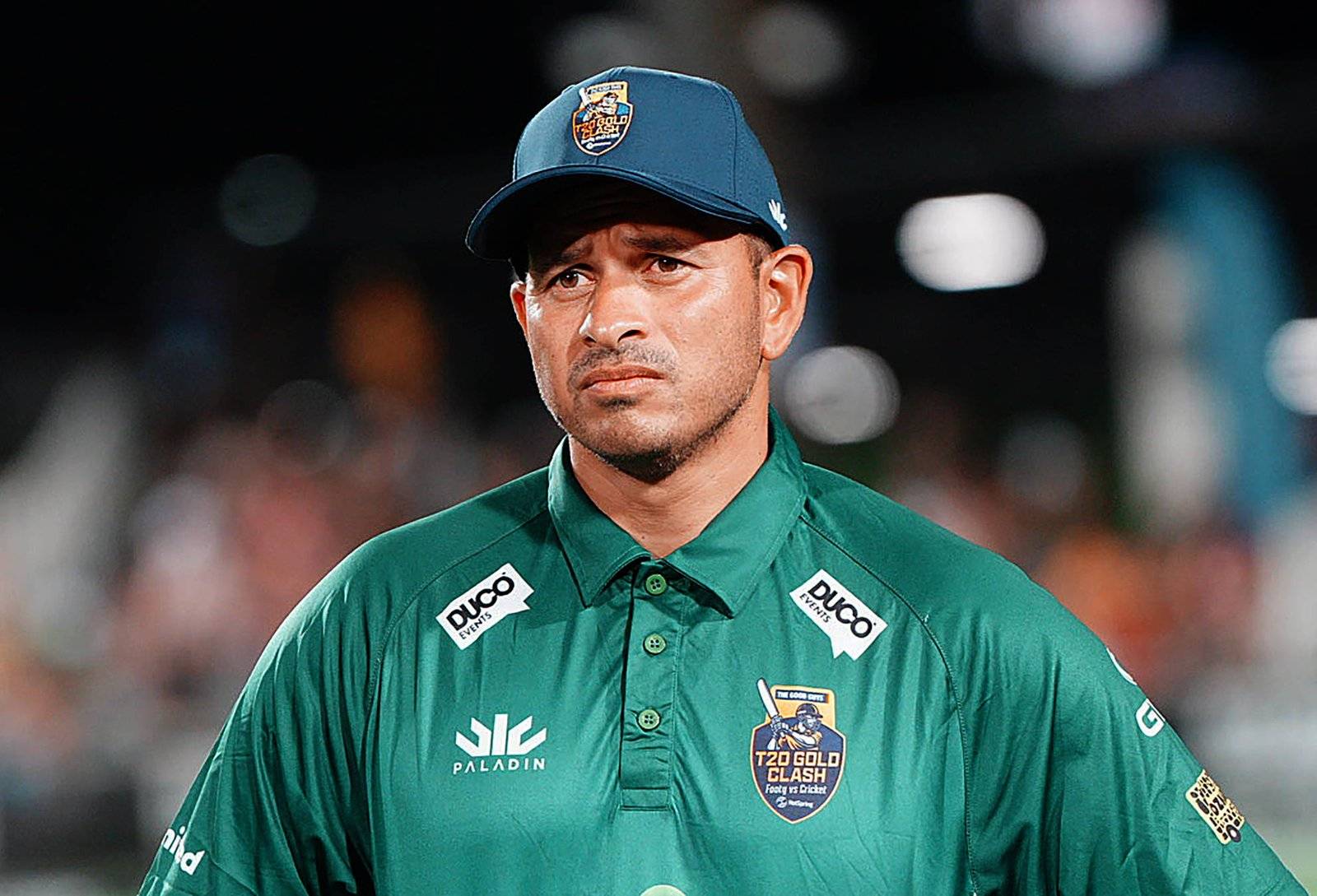
Usman Khawaja has proposed a compromise to Cricket Australia (CA) in an attempt to end the divisions over the 2018 ball-tampering scandal, suggesting the entire Australia squad could accept responsibility without confirming that sandpaper was used.
The former Test opener revealed that he sent CA chief executive Todd Greenberg a proposed statement last week, hoping the players involved in the South Africa tour could agree on a collective response to the controversy.

The scandal returned to the spotlight this month after Khawaja's autobiography reignited debate over how much the wider team knew about the ball-tampering operation during the infamous Cape Town Test.
Khawaja's proposed statement seeks to establish common ground without requiring players to agree on every detail of what happened.
"We accept knowledge as a team that we knew we were ball tampering by artificially altering the condition of the ball in South Africa in 2018," the statement read.
"Whether it was sandpaper, or by any other means is irrelevant. We knew what we were doing and we take full responsibility as a team and squad for our actions, something we should have done eight years ago.
"Furthermore, we would like to acknowledge Steven, Cameron and David paid an enormous price for the sake of the team for which we are sorry and eternally grateful."
Khawaja read out the proposed wording during an appearance on The Grade Cricketer podcast on Wednesday.
He said Greenberg had been receptive to discussing the idea but was unsure whether it would be accepted by the other parties involved.
Khawaja seeks middle ground over Sandpapergate
Khawaja believes collective responsibility is the missing part of the response to the scandal, which resulted in lengthy suspensions for Steve Smith, David Warner and Cameron Bancroft.
Smith and Warner received 12-month bans, while Bancroft was suspended for nine months after being caught using sandpaper to alter the ball's condition during the third Test against South Africa in March 2018.
Khawaja's position is that the wider team knew about the ball-tampering, a claim supported by Warner and Bancroft. However, Australia captain Pat Cummins and fellow bowlers Mitchell Starc and Josh Hazlewood have maintained that they did not know sandpaper was being used.
Cummins strongly rejected Khawaja's claims during a lengthy press conference earlier this month, saying it was wrong to suggest that he and other bowlers knew sandpaper was going onto the field.
He also accused Khawaja of being "casual" with the lives and reputations of those involved.
Khawaja admitted that the comments had hurt him, but said he had contacted Cummins before the press conference in the hope that the pair could find common ground.
"I'm not going to judge him on probably like 20 minutes of a presser or 15 minutes, I don't know, however long he had a go at me," Khawaja said.
"There's plenty of love no matter what. I'm not a hateful guy. But it was surprising because I did text Pat before that, a couple of days out, hoping he'd be able to find a middle ground which brings everyone in together in this.
"Rather than putting the walls up and then really just creating a bigger division. I was hoping he'd come out and this is what I was trying to say in my text. If we met in the middle, we could really just squash this."
Cricket Australia seeks a way forward
The proposal comes as CA attempts to create an opportunity for those involved in the 2018 tour to share their accounts of the scandal.
Last week, the governing body announced an independent forum where former players and staff can discuss their recollections without fear of further sanctions.
The forum is intended to provide a safe environment for those involved to speak, rather than launch a new investigation or impose further punishments. However, questions remain over how much of the information gathered will eventually be made public.
Khawaja and Warner have both questioned whether the process will provide the transparency needed to bring the matter to a close.
CA has meanwhile reaffirmed its support for Cummins as captain of the Test and one-day international teams, rejecting suggestions that the renewed controversy has compromised his position.
For Khawaja, the proposed statement offers another possible route towards closure. He has acknowledged that getting the entire group to agree may be difficult, but believes the effort is worthwhile.
The key question is whether the players can accept collective responsibility for what happened without first reaching agreement on every disputed detail of the scandal.