

The final double-header before Formula 1's summer break starts at the sport's finest circuit, with a championship that has spent a month tightening and a technical question nobody can yet answer.
Forty-four laps of Spa-Francorchamps await on Sunday, on a 7.004-kilometre lap that this year will test batteries as brutally as it tests nerve.
F1 title race arrives with everything in play
Kimi Antonelli leads on 179 points, but leads uneasily: car failures in two of his last three races have shrunk a once 66-point cushion to 25 over George Russell, who left Silverstone with his deficit nearly halved and his collecting habit intact.
Lewis Hamilton sits third on 147 in a Ferrari that has won two of the past three Grands Prix, at a circuit where he has won five times and where a sixth victory would draw him level with Michael Schumacher's record.
Spa's long flat-out stretches should suit the Mercedes power unit, but the team's reliability trouble means every setting turned up for performance is a gamble, and with Ferrari's pace now genuine, nothing can be turned down for safety either.
 FIA@fia
From its earliest days in motor sport to its latest safety upgrades, Spa-Francorchamps has remained one of the world's most unique and iconic racing circuits.
Discover @circuitspa like you've never seen it before! Now on the FIA's YouTube
The F1 energy problem, explained
The defining technical story of the weekend was set out by Fernando Alonso before anyone turned a wheel. Under the 2026 rules roughly half the car's power is electrical, and Spa is dreadful at refilling the battery: just three heavy braking zones in seven kilometres, at La Source, Les Combes and the Bus Stop, and none at all in the long second sector.
Deploy the optimal way on the two big straights, Alonso warns, and drivers face around a minute of sector two with no electrical power whatsoever, running on a combustion engine that produces less than Formula 2's 620 horsepower.
"We have significantly less power than last year and less power than F2."
McLaren's own preview called the weekend a shock to the system and one of the most energy-starved tracks on the calendar, with teams anticipating heavy clipping through the middle sector.
The honest caveat: over a full lap these cars remain far quicker than anything in Formula 2, and Silverstone, which drew similarly bleak forecasts, ultimately produced good racing. The bleakest predictions of this era have a habit of softening once the lights go out.
What Stella expects, and what worries him
McLaren boss Andrea Stella expects the starvation to shape the racing rather than ruin it, predicting overtaking driven by who has energy left rather than who is bravest into Les Combes.
"Similarly to Silverstone, it will be a heavily energy-starving circuit."
His caution is the more important part. Stella has urged the sport to take seriously the drivers' warnings about unpredictable closing speeds between cars with full and empty batteries, a concern that lands heavily at a circuit that claimed the lives of Anthoine Hubert and Dilano van 't Hoff in recent years.
There is a setup wrinkle too: the new straight mode reduces the old incentive to bolt on a skinny Spa rear wing, and Stella is curious whether anyone brings a true low-drag package at all.
FIA@fiaA weekend of racing at one of the sport’s most iconic venues!
#FIA #F1

The Spa weather has calmed down, mostly
The forecast has spent the week improving. Monday's outlook threatened rain across all three days; by Thursday the picture had dried to a strong chance of showers during Friday practice, a dry qualifying day around 23 degrees and a cool, likely dry race day around 20.
Spa's microclimate respects no forecast, and the season-long question still hangs unanswered: the 2026 cars have not yet raced together in proper rain, and Stella notes that a wet Spa would complicate both energy deployment and tyre warm-up.
Red Bull retreats, and the rest
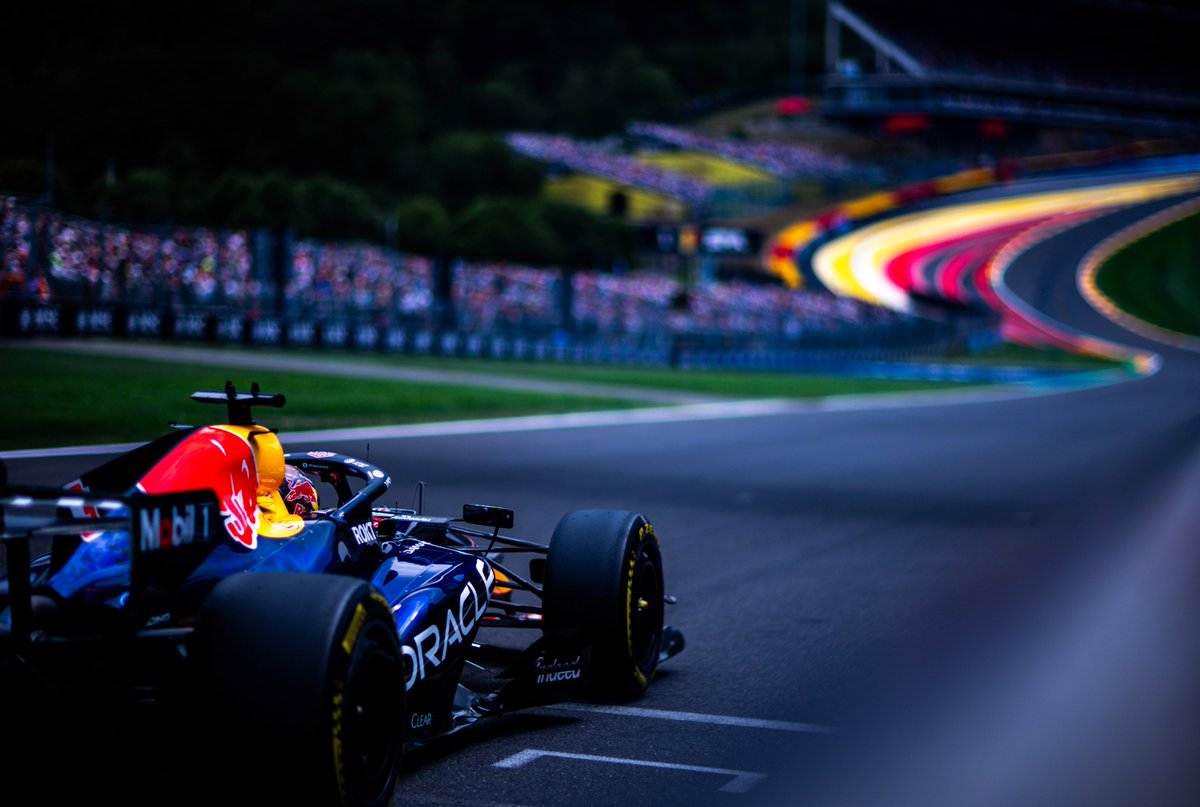
Red Bull arrives having shelved its twice-failed rotating rear wing in favour of the old specification, and with Max Verstappen, a three-time winner here, saying plainly that he does not know how the car will perform after a strong Austria and a dispiriting Silverstone.

The reigning constructors of chaos, McLaren, have a quieter form to defend: Oscar Piastri won last year's rain-delayed Belgian Grand Prix from Lando Norris's pole, and the papaya cars have been pacing their upgrades while the front three fight. Spa has a habit of promoting whoever solves its riddle first.


