

Lewis Hamilton has dismissed suggestions that Ferrari's smaller turbocharger is giving the team an advantage at the Mexico City Grand Prix, arguing that Mercedes and Red Bull continue to hold a straight-line speed advantage.
Ferrari arrived in Mexico with expectations that its power-unit design could prove particularly effective at the Autodromo Hermanos Rodriguez, where the high altitude places additional demands on turbochargers.
The circuit sits 2,285 metres above sea level, with air density around 25% lower than at sea level. The thinner air forces turbochargers to work harder to maintain the airflow required by the engine.
 Scuderia Ferrari HP@ScuderiaFerrari
Ferrari's smaller turbocharger was therefore expected to offer an advantage by reducing turbo lag, the delay between a driver demanding power and the turbocharger delivering it.
However, Hamilton believes the difference has not translated into a meaningful performance gain.
“I don't really agree on the turbo thing,” the seven-time world champion said.
“If you look at the speeds of the Mercedes and the Red Bull, they're still massive. They're still quicker at the end of the straights. Like they are at every race. So the turbo is just not making a difference.
“It's still pulling more at the end of the straights, so I think we're still losing a good couple of tenths, two or three tenths, but the car is behaving really well fundamentally.”
Hamilton questions Ferrari's straight-line speed
The removal of the MGU-H from Formula 1's 2026 power units has made turbo response a particularly important consideration in Mexico.
The component previously helped manage turbo speed and reduce lag, but its removal means manufacturers must find other ways to maintain performance in conditions where the turbocharger has to work harder.
A smaller turbo can potentially respond more quickly because it has less inertia, but Hamilton's assessment suggests Ferrari is still giving away time to its rivals on the straights.
That has not stopped him from feeling positive about the overall performance of the SF-26.
“The car is working well at tracks like this,” he said.
“I think the car feels like it's capable of competing in qualifying. But again, as I said, I don't know what it is they are able to do in qualifying. Everyone seems to take a step. I don't know if we can eke out a little bit more performance.”
Scuderia Ferrari HP@ScuderiaFerrariHamilton's comments came after a Friday in which team-mate Charles Leclerc topped both practice sessions, giving Ferrari an encouraging start to the weekend.
Leclerc posted a fastest lap of 1:18.128 in FP1 before improving to 1:17.827 in the second session.
Hamilton was fourth in the opening practice session, 0.738 seconds behind his team-mate, but his afternoon was interrupted by a power-unit issue.
Hamilton left frustrated by Ferrari stoppage
The British driver was instructed to stop his car during FP2, ending his running before he could complete the planned programme.
Hamilton admitted he did not know what had caused the problem, but insisted the Ferrari had been performing well before he was told to pull over.
“They told me to stop. They saw some sort of problem, but it felt really good up until then,” he said.
“The car was feeling great. I think we did a good job, made good setup changes, and the car was in a good place.
“My middle sector was strong, but even on my lap, we were losing power in a few places. I think I lost three-tenths.”
Scuderia Ferrari HP@ScuderiaFerrari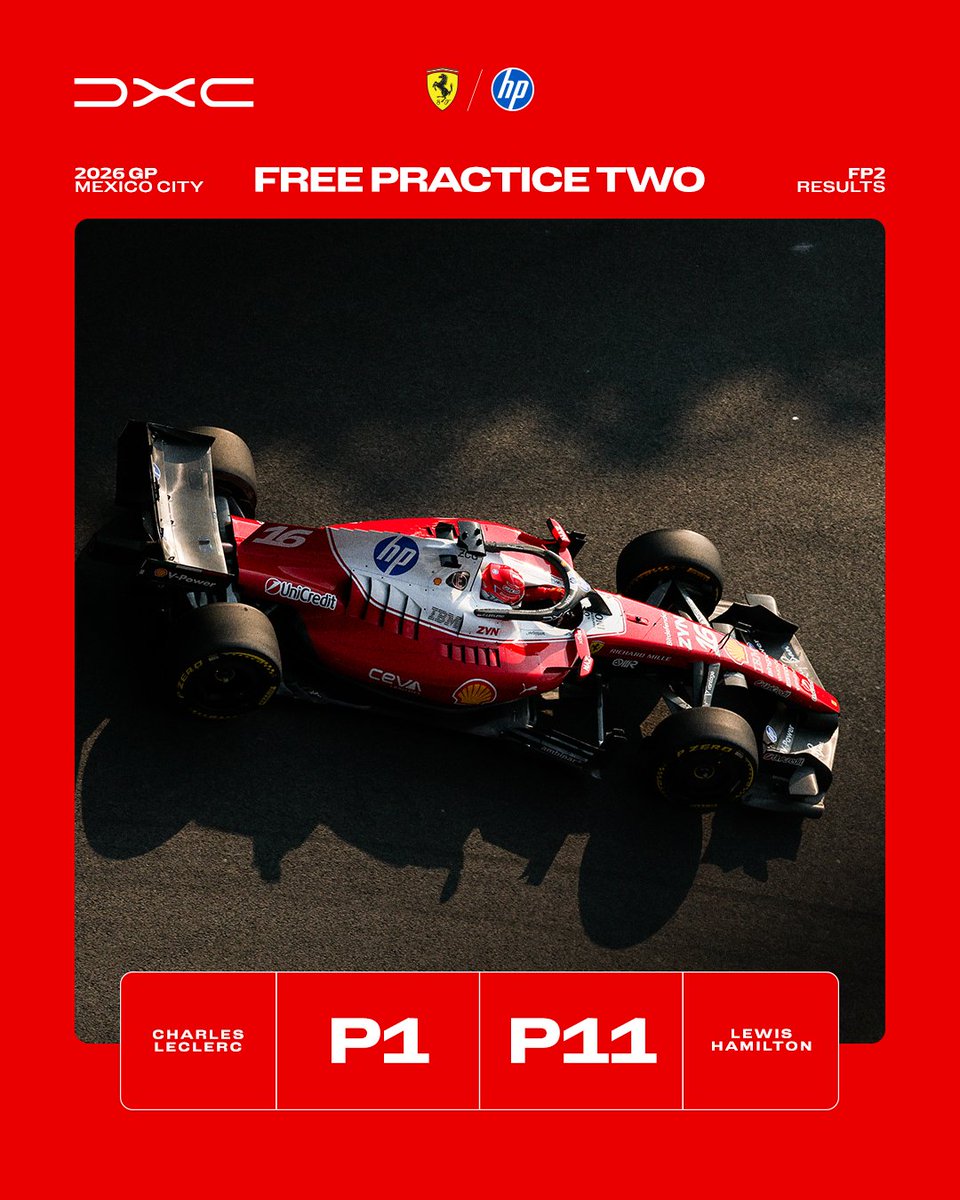

Hamilton eventually finished 11th in FP2, while Leclerc remained fastest ahead of Lando Norris and George Russell.
The interruption was particularly frustrating because Hamilton believed Ferrari had made progress with its set-up during the day.
“We've got a good car this weekend, so it is a shame to have lost this session,” he added.
Ferrari will investigate the issue before Saturday's running, with Hamilton hoping to carry the car's promising underlying performance into qualifying.
Leclerc's Friday pace offers encouragement, but Hamilton's assessment suggests Ferrari still has work to do if it is to challenge Mercedes and Red Bull over a full lap.


