

Formula 1's 2026 power units can deliver far more electrical power than their predecessors, but Baku is long enough to expose the point at which that advantage starts disappearing.
The Azerbaijan circuit gives the cars a 2.2km run from the final corner to Turn 1, the longest flat-out section of the season.
A car can leave the final corner with the MGU-K delivering its maximum permitted electrical power, but as its speed rises, the regulations progressively take that power away.
By the time the cars reach the braking zone at around 350km/h, the internal combustion engine is doing almost all of the work.
The interesting question at Baku is therefore not simply how much electrical energy a car has, but how effectively it can use that energy before speed makes it less useful.
Where Baku exposes the 2026 power-unit rules
The 2026 regulations give the ERS-K a maximum electrical output of 350kW, while the energy store can move through a maximum 4MJ change in state of charge.
Those figures are related, but they are not the same thing as saying a car has a four-megajoule battery available for one straight. At 350kW, four megajoules represents about 11.4 seconds of theoretical full-power deployment. In reality, the electrical output changes with speed, so the useful deployment window is more complicated.
That becomes particularly important once a car accelerates beyond 290km/h.
Normal ERS-K deployment begins to taper above that speed and reaches zero at 345km/h. The separate Override mode can extend electrical deployment further, with its own speed-dependent power curve reaching zero at 355km/h.
 VIVASPORT@vivasportcom
vivasport.com/za/f1/stories/…
That means the driver does not simply press a button and receive 350kW all the way to Turn 1. The electrical contribution is strongest lower down the straight, then diminishes as the car approaches its top speed.
The change matters because the 2026 power unit has moved much further towards electrical propulsion. The internal combustion engine's contribution has fallen from roughly 550-560kW to 400kW, while the MGU-K has increased from 120kW to 350kW. The MGU-H has also disappeared.
The result is a power unit in which electrical energy is a much larger part of the performance equation.
Baku is simply long enough to show what happens when that electrical contribution runs into its regulatory ceiling.
Two limits arrive on the same straight
The run from the final corner to Turn 1 stretches for approximately 2.2km along Neftchilar Avenue and is the longest flat-out section on the Formula 1 calendar.
Mercedes describes it as the longest such section of the season, while the braking point arrives only after a run of roughly 15 seconds at full throttle.
That creates a sequence rather than a single energy event.
A car exits the final corner at a speed where maximum electrical deployment is available. The driver can use that power to accelerate hard and build speed, with the battery state of charge determining how much electrical energy can be spent.
Then the speed itself becomes the restriction.
Once the car passes 290km/h, normal electrical deployment starts to taper. At 345km/h, it disappears completely. If Override is available and being used, electrical assistance can continue to a higher speed, but it too eventually reaches zero.
The closing section of the straight is therefore fundamentally different from the opening section.

The car has not necessarily run out of energy. Instead, the regulations have made that energy progressively less useful at the speeds being reached.
That distinction changes the strategic question.
A driver can deploy aggressively after the final corner and use electrical power when it provides the greatest acceleration benefit. Alternatively, the team can manage deployment differently, trying to preserve useful energy for another part of the lap or another attack.
Either way, the final part of the Baku straight belongs increasingly to the internal combustion engine.
Baku can give the battery plenty back
That makes Baku different from a circuit such as Monza, where the challenge is heavily influenced by the difficulty of recovering enough energy on a lap dominated by long straights and relatively few braking zones.
At Monza, the FIA imposed a 5MJ qualifying recharge limit for 2026, specifically to reduce the need for excessive harvesting strategies on the straights. The result is an energy-management problem in which cars can be forced to balance outright speed against the need to recover energy.
Baku presents a different problem.
Its middle sector is packed with slow and medium-speed corners, giving the MGU-K repeated opportunities to recover energy under braking. The forecast qualifying recharge ceiling for Azerbaijan has been put at 8.5MJ, close to the upper end of the 2026 range.
The issue is therefore less about finding somewhere to recover energy and more about what happens after that energy has been stored.

The battery can be replenished through the lap, but the 2.2km straight eventually asks a different question: how much of that electrical energy can actually be turned into useful acceleration before the car becomes too fast for the regulations to allow full deployment?
That is why Baku is such an interesting test of the 2026 cars.
The trade that could decide the weekend
The energy question does not exist separately from the aerodynamic one.
Baku has always demanded a compromise between the low drag required on its enormous straight and the downforce needed for the tight castle section. The 2026 cars add another layer because active aerodynamics are designed to switch between Corner Mode and Straight Mode, allowing teams to manage the compromise more efficiently.
A car that produces efficient downforce can potentially run less drag without giving away as much performance in the corners. Less drag means less work for the power unit on the straight and a better chance of carrying speed towards the braking zone.
That makes the final kilometres of the run a measure of efficiency as much as outright power.

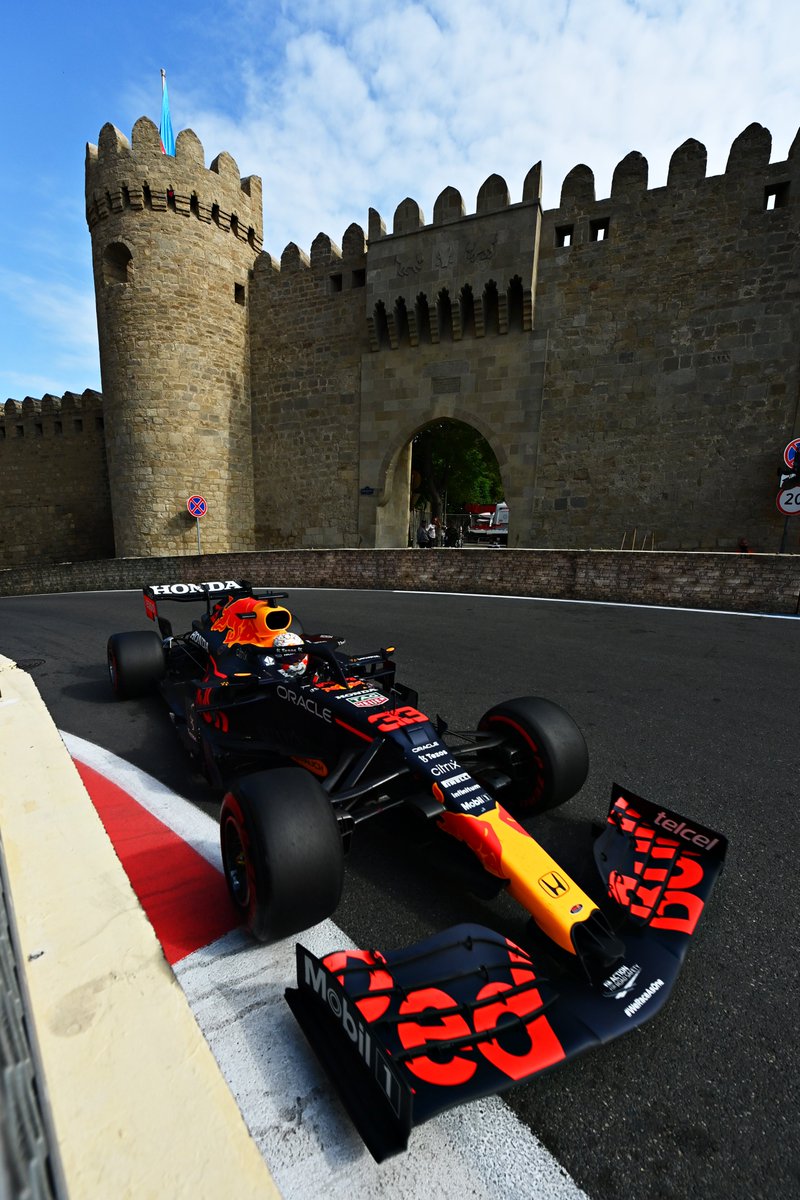

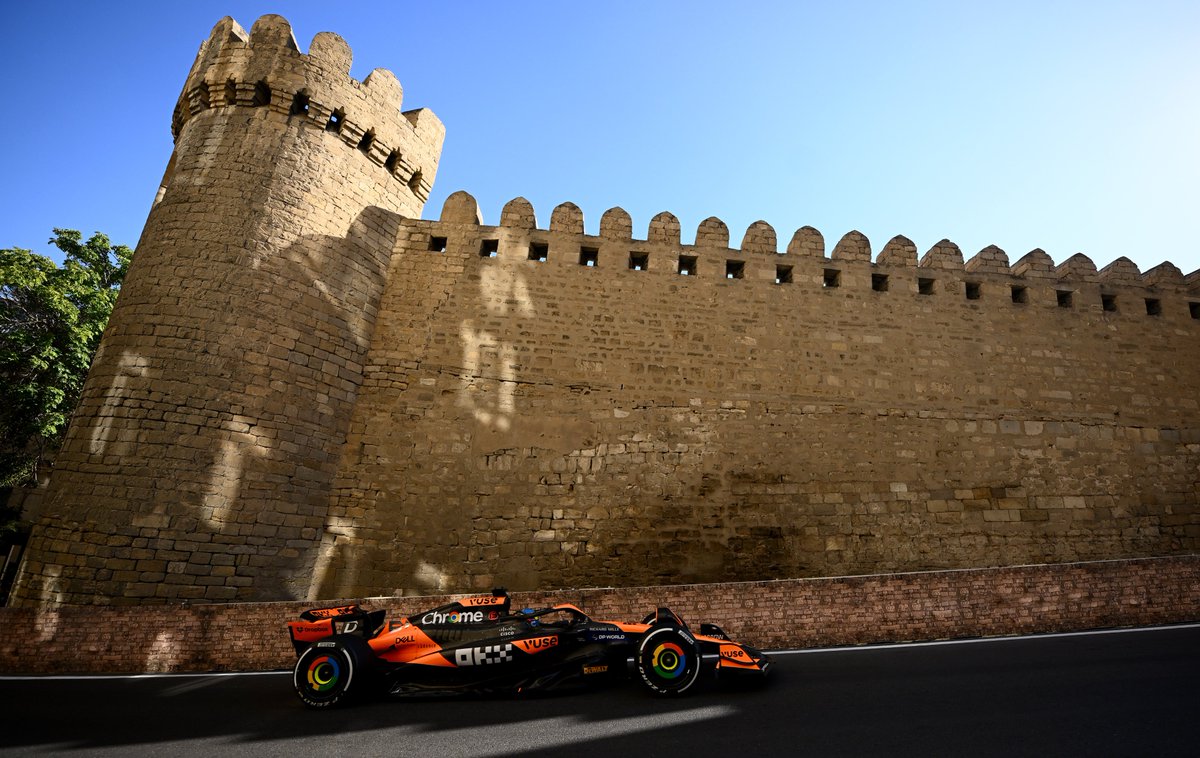
The quickest car may not be the one that has the most electrical energy available. It may be the one that gets the most acceleration from that energy before the speed limits start taking it away.
Baku's 2.2km straight is long enough for the entire process to play out in front of us.
The car leaves the final corner with electricity doing much of the work. Speed rises, the electrical contribution fades, and eventually the engine is left to carry the car towards Turn 1.
That makes Baku one of the clearest places on the calendar to see the central challenge of Formula 1's new power units: not simply producing electrical power, but deciding exactly where it is worth spending.


