

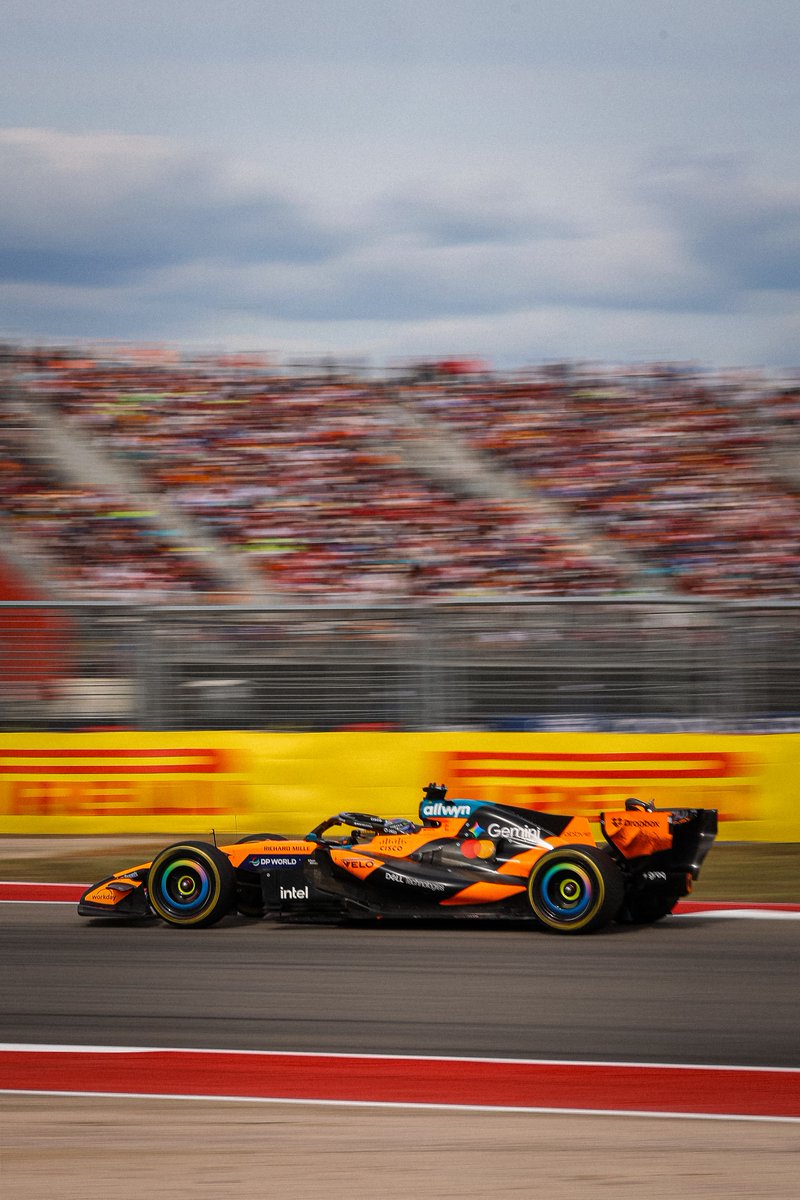
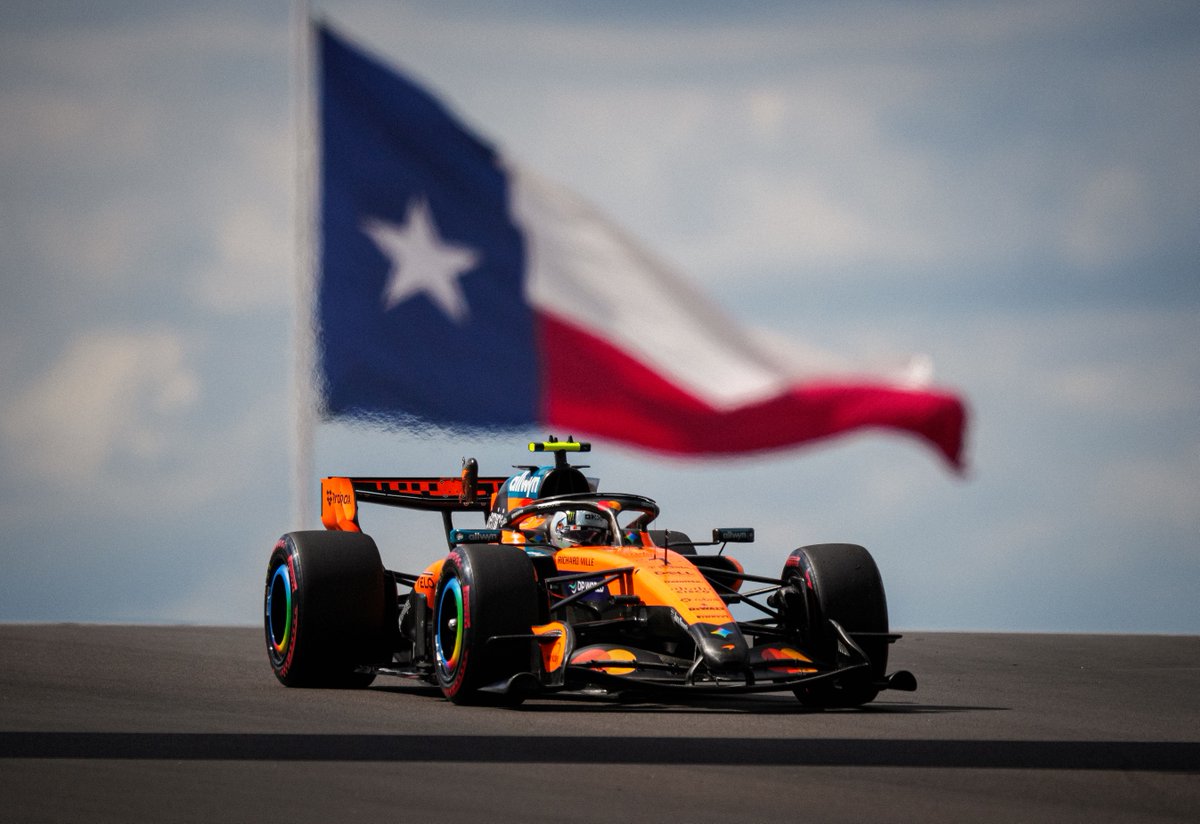
McLaren team principal Andrea Stella has suggested Lando Norris is still owed some good fortune after his lost opportunity at the Spanish Grand Prix, with the Briton's fifth-place finish in Austin leaving the team looking for ways to turn competitive pace into victories.
Stella made the pointed reference to Madrid after McLaren opted for a one-stop strategy at the United States Grand Prix, hoping a safety car might give Norris an opportunity to challenge the Ferraris and Max Verstappen.
That intervention never arrived, leaving Norris 30.5 seconds behind race winner Kimi Antonelli at the Circuit of The Americas.

McLaren's decision offered an outside chance of a better result, but ultimately left the team with a fifth-place finish and more questions about its ability to fight consistently at the front.
"We are still waiting for compensation for what happened in Madrid? It will come," Stella said.
McLaren gamble on one-stop strategy in Austin
Norris started eighth in Austin after struggling to extract the maximum from the McLaren over a single qualifying lap.
He recovered ground during the race, but McLaren eventually decided that a conventional two-stop strategy would leave him behind the cars it was trying to catch.
The team therefore committed to a one-stop approach, hoping a safety car would provide an opportunity to gain track position without losing as much time in the pits.
"We were actually catching up to the two Ferraris and [Max] Verstappen in the second stint, and at some stage we just decided to go for the one-stop," Stella explained.
"Because if we go for a two-stop, we are always going to stay behind. For the one-stop, this gives you the possibility to take advantage of a safety car, which didn't come."
The gamble also required McLaren to assess how long Norris could make his hard tyres last. Stella said the team knew it would be difficult to keep Verstappen and Charles Leclerc behind, while the prospect of holding off Lewis Hamilton depended more heavily on how the tyres performed towards the end.
The strategy was therefore not a straightforward route to a podium. It was a calculated attempt to create an opportunity that might not otherwise have existed.
McLaren were satisfied with how the plan was executed, even though the hoped-for intervention never materialised.
Madrid disappointment remains fresh
Stella's reference to compensation brought the focus back to the Spanish Grand Prix in Madrid, where Norris started from pole position and appeared capable of challenging for victory.
An ill-timed virtual safety car changed the race. Norris had already passed the pit entry when the caution period began, allowing Antonelli and Verstappen to stop at a reduced time cost. Norris had to wait until the next lap to pit, and a slow stop further damaged his position.
He eventually recovered to third, but the opportunity to win had slipped away.


Stella's latest remark was a pointed reminder of that disappointment, although it does not mean McLaren expect any formal compensation from Formula 1. Rather, the team principal was expressing hope that circumstances would eventually fall in Norris's favour.
Austin did not provide that correction. Antonelli won again, while Leclerc, Verstappen and Hamilton finished ahead of Norris.
Qualifying remains McLaren's weakness
The result also reinforced a concern Stella had raised after qualifying: McLaren believe their race pace is stronger than their single-lap performance suggests.
Norris qualified eighth, more than a second behind Antonelli's pole time of 1:34.035. He had initially appeared to qualify sixth, but his lap was deleted for exceeding track limits.
Stella said the race had shown that the car's potential was closer to what the team expected, after Norris made progress against the Ferraris and Verstappen.
"In the race we saw that what we said [after qualifying] could have been the potential of the car was realised," he said. "We thought that we had a faster car than we were able to realise on track."
However, Stella was less convinced by Norris's suggestion that the car could have qualified second.
"Lando said that the car could have been good for P2," he said. "I think that's a little bit of an exaggeration because even if the potential was there, as I've explained, this year somehow is very difficult to use the full potential."
Stella believes that extracting maximum performance is more difficult in qualifying, when drivers push harder over a single lap, than in a race where they can leave a little more margin.
He also acknowledged that Antonelli appeared to have an advantage over the rest of the field in Austin, while McLaren's race pace was broadly competitive with Ferrari and Red Bull.
McLaren need more than good race pace
Stella's assessment was cautiously positive about the team's execution and recent upgrades, but he was clear that McLaren still have work to do.
The team needs to improve its qualifying performance and continue developing the car if it is to challenge consistently for podiums and, more importantly, victories.
That is the distinction behind Stella's comments. McLaren can make strategic decisions that create opportunities, and Norris can recover positions when the car performs better over a race distance. But starting further back makes the task harder and leaves the team more dependent on unusual circumstances.
Madrid was a reminder of how quickly a race can turn against a driver. Austin showed the limits of trying to compensate through strategy alone.
Stella remains hopeful that Norris will have better fortune, but McLaren's more immediate priority is to ensure that the car's potential is easier to access when qualifying matters most.


