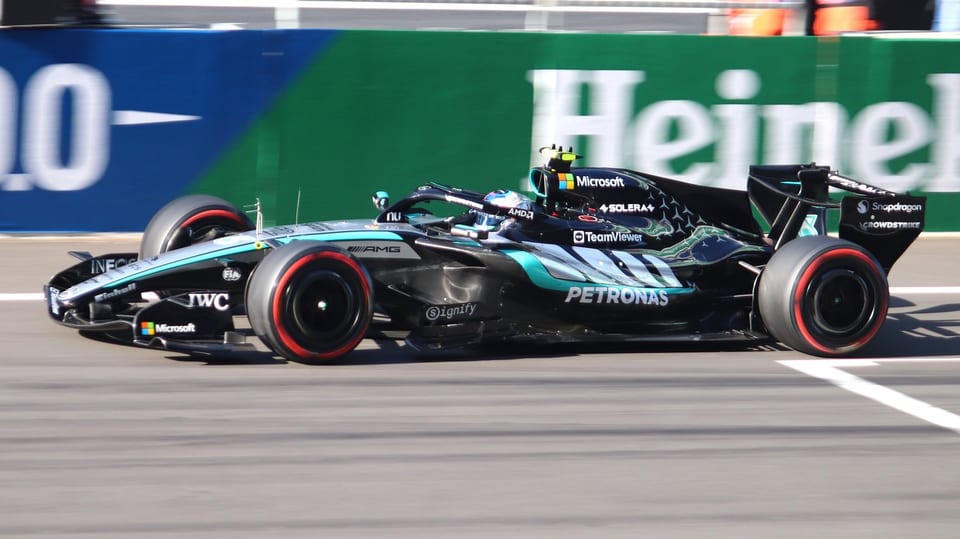
Mercedes have confirmed George Russell continues to suffer from a power deployment issue that differs from teammate Kimi Antonelli's car after another frustrating outing at the Belgian Grand Prix.
Russell's race ended on the opening lap at Spa-Francorchamps after he lost power along the Kemmel Straight before colliding with Lewis Hamilton at Les Combes.
The Mercedes driver retired immediately, while Hamilton received a five-second penalty for the incident.
The early exit left Russell 50 points behind Antonelli in the Formula 1 drivers' championship after the Italian claimed victory in Belgium.
 George Russell@GeorgeRussell63

Mercedes still investigating ongoing power problem
Mercedes deputy technical director Simone Resta revealed the team first noticed differences between the two cars at Silverstone and initially believed Russell's driving style was the main cause.
The Briton worked to adapt his approach ahead of the Belgian Grand Prix, but the issue remained.
"We've been having a lot of questions about the issues that George is facing with the deployment, and all that started in Silverstone, where we started to see some deployment difference between our two cars," Resta said in Mercedes' post-race debrief.
"We've been doing a lot of analysis, and we came to the conclusion that one of the major contributors was related to driving style, different driving style between the two cars."
Russell's Mercedes changes not enough
According to Resta, Russell made significant adjustments before the Belgian Grand Prix in an effort to solve the problem, but Mercedes still detected differences between his car and Antonelli's.
"George studied that quite a lot and was able to change it and adapt going into Spa, but still, we can still see some difference in deployment between the two cars."
 Mercedes-AMG | F1 News 🏁@MercedesAMGTR
Russell described the issue as "serious" after the race and said Mercedes are continuing to investigate why his car is behaving differently to that of his championship-leading teammate.
The next round of the Formula 1 season is the Hungarian Grand Prix at the Hungaroring, which is sometimes referred to as 'Monaco without the walls' due to its many corners and no real straights.