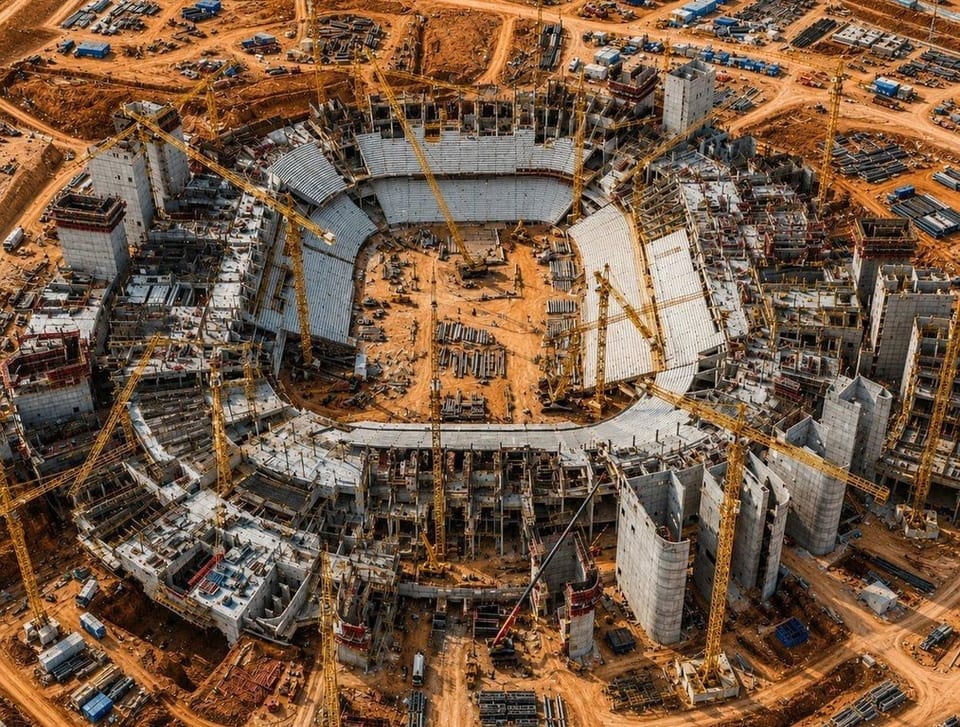

World Cup 2026 venue BC Place opened in 1983 as the first covered stadium in Canada.
Since then, it has hosted two of the most-watched moments in Canadian sporting history: the opening and closing ceremonies of the 2010 Winter Olympics, and the 2015 Women's World Cup final, in which the United States beat Japan 5-2 before a crowd of 53,341.
For the World Cup it is known as Vancouver Stadium - FIFA's neutral-naming policy applies here as at all World Cup 2026 venues, despite what some early reporting suggested.
Seven matches run from 13 June to 7 July, making Vancouver one of only six venues in the tournament to host a Round of 16 match.
The group stage programme includes Canada's two home fixtures in Vancouver - vs Qatar on 18 June and vs Switzerland on 24 June - as well as Australia vs Turkey, two Group G matches involving New Zealand and Egypt and Belgium, and a Round of 32 on 2 July that precedes the Round of 16 on 7 July.
Canada's fans will be present in significant numbers for the June 18 and June 24 fixtures; the Swiss, Australian and New Zealand communities across British Columbia and the Pacific Northwest will make up a substantial proportion of support for the non-Canada matches.
Vancouver's location, climate and food culture give it a matchday context that most stadium guides struggle to fully convey.
 OFootball @ofootball__
The stadium sits in the False Creek neighbourhood of downtown Vancouver, a ten-minute walk from Gastown, fifteen from Stanley Park.
The SkyTrain Expo Line provides direct rapid transit access -- though with a critical caveat that most travel guides get wrong: Stadium-Chinatown Station is closed on all match days.
The correct station is Main Street-Science World, one stop east, with a five-minute walk to BC Place from there.
What follows is the complete guide to the stadium, its matches and everything a visitor to this World Cup 2026 venue needs to know.
FIFA name | Vancouver Stadium (FIFA neutral-naming policy applies; NOT retaining commercial name as some early reporting suggested) |
Commercial name | BC Place |
Capacity | 54,500 (World Cup configuration) |
Matches hosted | 7 (five group stage, one Round of 32, one Round of 16) |
Opened | 1983; comprehensively renovated 2010-2011 at a cost of approximately C$563 million |
Location | 777 Pacific Blvd, Vancouver, BC - False Creek neighbourhood, downtown Vancouver |
Roof | Retractable ETFE (ethylene tetrafluoroethylene) membrane - opens and closes in approximately 20 minutes; full climate management possible |
Tenants | Vancouver Whitecaps FC (MLS), BC Lions (CFL) |
Major events | 2010 Winter Olympics (opening and closing ceremonies); 2015 Women's World Cup final (USA 5-2 Japan) |
Pitch | Hybrid natural grass system - synthetic fibres injected into natural grass base; ventilation and drainage beneath the pitch |
SkyTrain | Expo Line to Main Street-Science World Station (NOTE: Stadium-Chinatown Station is CLOSED on all match days) |
Airport transit | Canada Line from YVR to Waterfront Station (approx. 25 min), then Expo Line to Main Street-Science World (approx. 5-8 min) - total approx. 30-35 min |
BC Place features, history and renovation
BC Place was built on the False Creek industrial lands in 18 months between 1982 and 1983, opening in June 1983 with an air-supported roof - a massive inflatable dome that became one of the most recognisable architectural landmarks in western Canada.
The air-supported roof was replaced between 2010 and 2011 with a retractable ETFE membrane during the stadium's comprehensive C$563 million renovation.
ETFE is the same translucent polymer used at Munich's Allianz Arena and at SoFi Stadium in Los Angeles - it allows diffused natural light through while managing heat and protecting the interior from the wet Vancouver climate. The roof opens and closes in approximately 20 minutes via a computerised control system that monitors cable tension, wind and atmospheric conditions.
The renovation transformed a functional but ageing multipurpose arena into one of the most technically capable stadiums in North America.
The interior was reconfigured, the pitch was lowered, sightlines were improved across all tiers, and a new scoreboard and LED system was installed. BC Place reopened in September 2011 in time for the BC Lions' CFL season.
The 2015 Women's World Cup final was its first truly global moment as a renovated venue - an occasion that demonstrated both its capacity and its ability to manage a high-demand international event across multiple days of preparation and media.
For World Cup 2026, the pitch received a hybrid grass system using technology that injects synthetic fibres into a natural grass base to create a more stable playing surface than either natural or artificial turf alone.
Drainage and ventilation infrastructure beneath the pitch manages the moisture levels that enclosed stadiums require to maintain grass quality across multiple consecutive fixtures.
The roof configuration for World Cup matches depends on weather and temperature; the venue can operate fully enclosed or partially open depending on conditions on any given match day.
 Infokid @Infokid1Infokid
The group stage programme at Vancouver Stadium
Canada vs Qatar on 18 June and Switzerland vs Canada on 24 June are the fixtures that will define the Vancouver World Cup experience for the majority of the Canadian fan base.
Canada's group - which also includes Bosnia and Herzegovina – likely requires them to take points from Qatar and Switzerland to advance.
Qatar are the side that became the first host nation to lose their opening match and exit at the group stage in 2022; Switzerland are the consistently reliable knockout-stage qualifiers who reached the quarter-finals at the last European Championship.
Both fixtures are winnable for Jesse Marsch's side, and both will sell out BC Place to its 54,500 World Cup capacity with a crowd that is, across both matches, predominantly Canadian.
Australia vs Turkey on the evening of 12 June (9pm Pacific, classed as 13 June in Eastern time and on official FIFA scheduling) opens the Vancouver programme with two sides who entered the tournament through significant qualifying campaigns.
Australia are in their sixth consecutive World Cup, while Turkey ended a 24-year absence through the UEFA play-offs. New Zealand vs Egypt on 21 June and New Zealand vs Belgium on 26 June give the Group G All Whites two Vancouver appearances - one at the start of their campaign and one at the close.
The combination of New Zealand's long-standing Pacific Northwest connection and Egypt's large diaspora in Vancouver and the broader Canadian West Coast means both fixtures will carry significant community support from outside the stadium.
Matches at Vancouver Stadium
Date | Match | Round | Group |
13 June | Australia vs Turkey | Group stage | Group D |
18 June | Canada vs Qatar | Group stage | Group B |
21 June | New Zealand vs Egypt | Group stage | Group G |
24 June | Switzerland vs Canada | Group stage | Group B |
26 June | New Zealand vs Belgium | Group stage | Group G |
2 July | TBC | Round of 32 | Knockout |
7 July | TBC | Round of 16 | Knockout |
Getting to Vancouver Stadium and the station that is closed
The SkyTrain Expo Line is the primary transit option for BC Place. Trains run every two to two and a half minutes in both directions on the Expo Line during peak match periods, making it one of the highest-frequency transit systems serving any World Cup 2026 venue.
The critical detail: Stadium-Chinatown Station - which sits closest to BC Place on the map - is closed to fans on all seven World Cup match days.
Security and crowd-management requirements within the stadium precinct render the station non-operational during matches. The correct station for World Cup matches is Main Street-Science World Station, one stop east on the Expo Line, approximately a five-minute walk from BC Place's main entrance along Quebec Street and Pacific Boulevard.
 Doctor Verdolaga 🇨🇦🇨🇴🇧🇷 @parceledigoque
From downtown Vancouver, the journey to Main Street-Science World is approximately five minutes from Waterfront Station. From Vancouver International Airport, the Canada Line from YVR Airport Station runs to Waterfront or City Centre Station in approximately 25 minutes; transfer to the Expo Line eastbound to Main Street-Science World adds five to eight minutes.
The total airport-to-stadium journey is approximately 30 to 35 minutes and costs C$3.70 for a Compass Card tap. Bus routes on Pacific Boulevard and Quebec Street also serve the stadium area on match days, with TransLink confirming enhanced frequency for all seven matches.
Driving and parking in the downtown core are heavily restricted on match days; the SkyTrain is the unambiguous recommendation from the City of Vancouver, TransLink and FIFA.