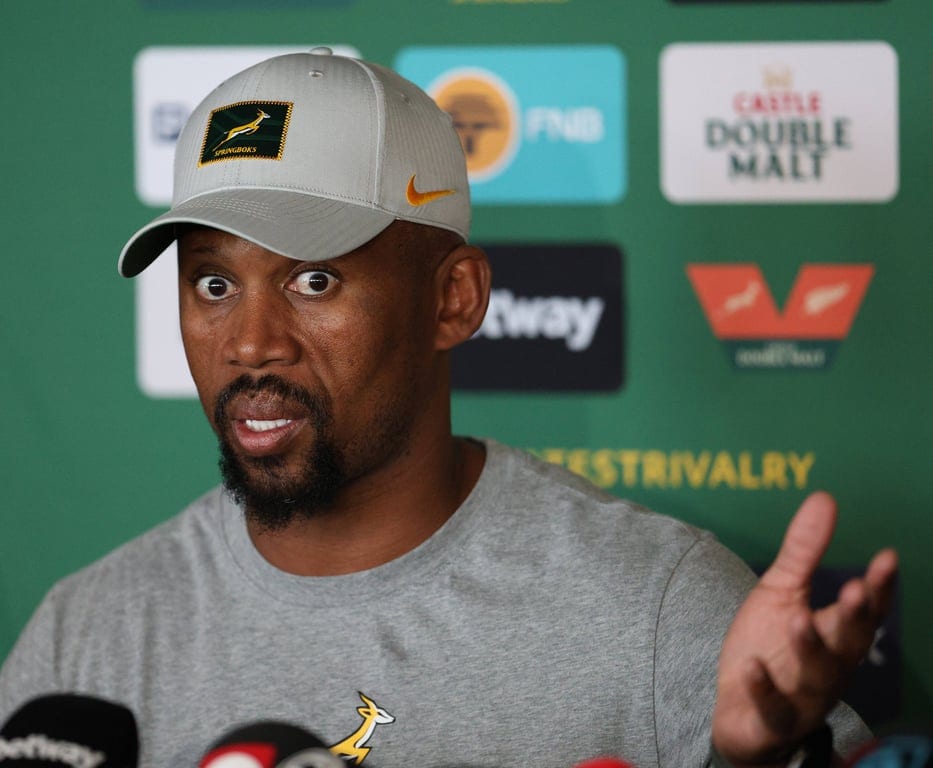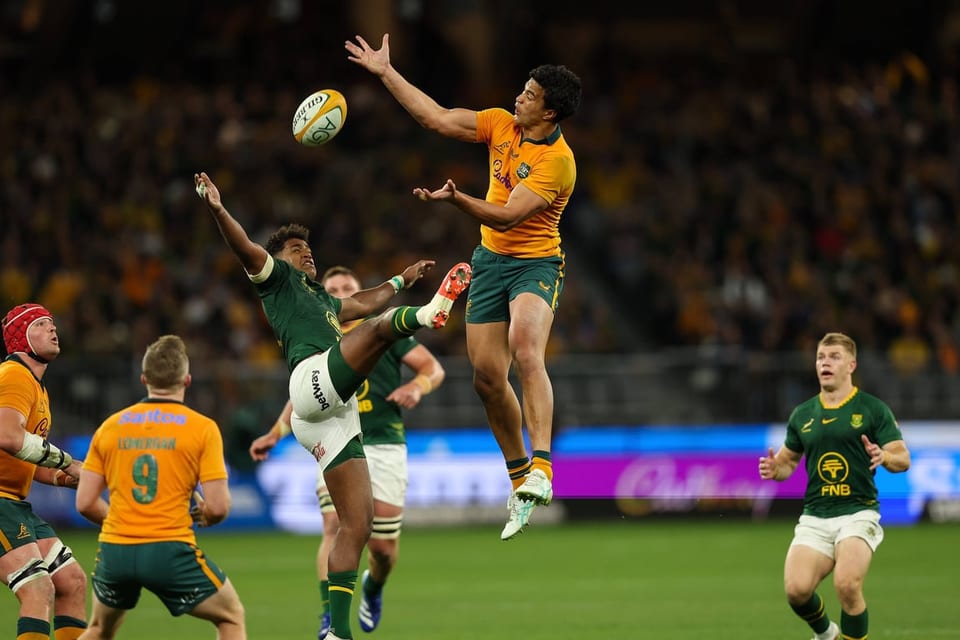

Bryan Habana is a retired South African rugby player, born 12 June 1983, who scored 67 tries in 124 Tests for the Springboks between 2004 and 2016 - more than any other player in Springbok history. A winger of exceptional pace, he won the 2007 Rugby World Cup, scored a record-equalling eight tries in that tournament, and retired as joint holder of the all-time Rugby World Cup try-scoring record with 15. |
On 24 June 1995, a 12-year-old schoolboy from Johannesburg attended the Rugby World Cup final at Ellis Park and watched Nelson Mandela walk onto the field in a Springbok jersey.
That afternoon stayed with Bryan Habana. He described it years later as the day he decided what he wanted to do with his life.
Twelve years after that final, Habana was on the field himself when South Africa won the 2007 World Cup in Paris, scoring eight tries in the tournament to equal Jonah Lomu's single-edition record.
By the time he retired in 2018 he had played 124 Tests, scored 67 international tries and stood alongside Lomu as the joint holder of the all-time World Cup try-scoring record. The boy who watched the 1995 final from the stands became the player who defined what a Springbok winger could be for the generation that followed him.
| Full name: | Bryan Gary Habana |
| Date of birth: | 12 June 1983 (age 42) |
| Nationality: | South African |
| Position: | Wing |
| Test caps: | 124 |
| Test tries: | 67 (Springbok record) |
| International career: | 2004–2016 |
| Club career: | Golden Lions; Blue Bulls/Bulls; Western Province/Stormers; Toulon (2013–2018) |
| Honours: | 2007 Rugby World Cup; Super Rugby 2007, 2009; Currie Cup 2009, 2012; European Champions Cup 2014, 2015 |
| Awards: | IRB World Rugby Player of the Year 2007; World Rugby Hall of Fame |
What made Bryan Habana such a dangerous winger?
Habana ran 100 metres in approximately 10.2 seconds at his peak - fast enough to be competitive in club-level athletics, and fast enough that a conservationist promotion in April 2007 staged a race between him and a cheetah to raise awareness of the endangered species.
The cheetah was given a handicap to make the contest viable. The result was close and the point was made.
Raw pace was the foundation, but it was not the whole explanation. Habana had the acceleration to convert a half-gap into a try from anywhere in the opposition half, and the positional intelligence to put himself where the half-gaps appeared.
He debuted for the Springboks on 20 November 2004 against England at Twickenham, came off the bench and scored a try 28 seconds after touching the ball for the first time.
South Africa lost 32-16, but nobody remembered much about the game beyond that debut.
His parents - both Manchester United supporters - named him after two players from the club's 1980s squads: Bryan Robson and goalkeeper Gary Bailey.
The rugby instincts came from elsewhere, developed through the Golden Lions system before he moved to the Bulls in 2005 and into the environment that would produce his best years in a Springbok shirt.
How many tries did Bryan Habana score at the 2007 Rugby World Cup?
Eight. Lomu had set the single-tournament record of eight tries at the 1999 World Cup. Habana equalled it in France in 2007, scoring in South Africa's pool matches against Samoa, England, Tonga and the United States, in the quarter-final against Fiji, and in the semi-final against Argentina.
Four of his eight came in a single pool match against Samoa. South Africa won the tournament, beating England 15-6 in the final at the Stade de France - the same stadium where Os du Randt played his last match of a career that had begun alongside Habana's father's sporting heroes.
For his 2007 performance, Habana was named IRB World Rugby Player of the Year - the highest individual honour in the sport and only the second time a Springbok had won it, after Schalk Burger in 2004. He was 24.
| Tournament | Tries | Record | Notes |
| RWC 2007 | 8 | Tournament record (equalled Lomu, 1999) | Won tournament; named Player of the Year |
| RWC 2011 | 2 | Became SA's leading World Cup try scorer | Passed Joost van der Westhuizen's record |
| RWC 2015 | 5 | Equalled Lomu's all-time record of 15 | Hat-trick vs USA (64-0 win) drew level with Lomu |
| Career total | 15 | Joint all-time World Cup record (with Lomu) | SA finished 3rd; Habana retired from Test rugby 2016 |
What did Bryan Habana achieve at club level?
Habana spent his formative years with the Golden Lions and then the Bulls, winning Super Rugby titles in 2007 and 2009, along with the Currie Cup in 2009. He moved to the Stormers and Western Province in 2010, adding another Currie Cup in 2012 before Toulon came calling.
The move to France in 2013 took him to one of the most decorated club sides in Europe at the time. Alongside Jonny Wilkinson, Matt Giteau and a squad assembled with considerable resources, Habana won back-to-back European Champions Cup titles in 2014 and 2015.
He remained at Toulon until 2018, when persistent injury problems and the natural end of a long career led to his retirement. His five seasons in the Top 14 confirmed that the qualities that had made him exceptional at international level translated without any loss of impact to the European game.
How is Bryan Habana remembered, and what is he doing now?
Habana was inducted into the World Rugby Hall of Fame, recognition of a career that produced the Springbok try-scoring record, the joint World Cup all-time try-scoring record and a 2007 World Player of the Year award.
He is the second-highest international try scorer in Test rugby history, behind only Japan's Daisuke Ohata.
Since retirement, he has remained visible in the sport as a pundit and ambassador, appearing regularly on broadcast coverage of major matches. He has been involved in coaching development programmes and maintains connections with the Springbok set-up through promotional and advocacy work.
The 'where is Habana now' question that searches consistently ask is answered simply: he is still in rugby, still recognisable to anyone who saw him play, and still associated with a version of the game - attacking, fast, committed to the line - that shaped how the Springboks played for more than a decade.
The 1995 final at Ellis Park that made him want to play rugby ended with a moment between Mandela and Pienaar that became a symbol of a country trying to become something new.
Habana, who was in the crowd that day, spent his career as part of the story that followed - the Springboks of the professional era, winning again in 2007 and producing the try-scorer who would stand alongside Lomu in the record books.
The schoolboy who watched from the stands left a mark on the game that the crowd at Ellis Park could not have imagined.