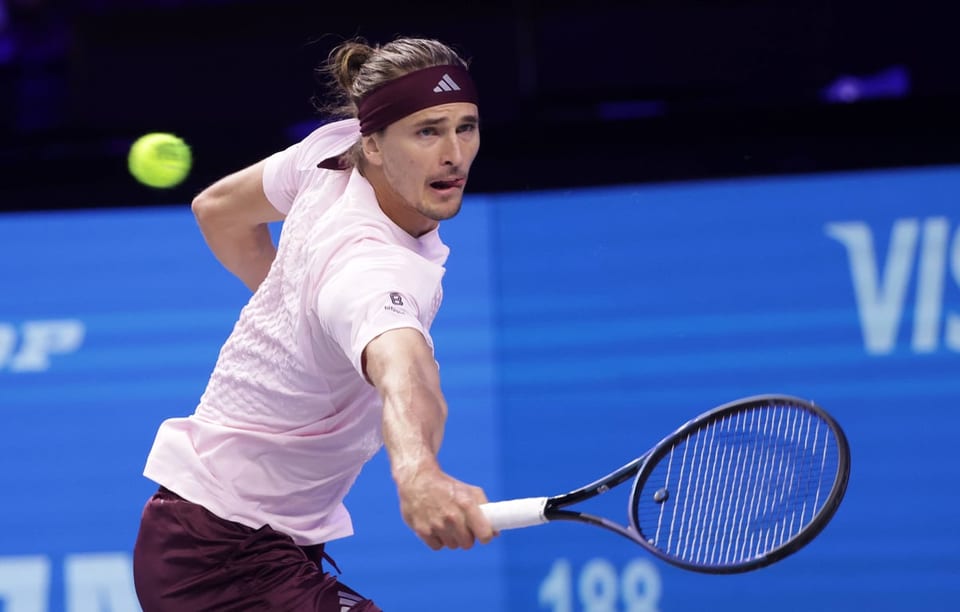

Jannik Sinner's hopes of returning to competitive tennis at the 2027 Australian Open have been clouded by fresh concerns over his persistent knee injury, with surgery reportedly being considered if his rehabilitation fails to produce the required results.
The Italian has not played since beating Alexander Zverev in the Wimbledon final on 12 July, with inflammation of the iliotibial band in his knee continuing to disrupt his recovery.

Sinner confirmed in October that he would miss the remainder of the 2026 season to focus on treatment and rehabilitation. His stated target is to return in Australia in January, although he has stressed that he will not rush the process at the risk of causing further damage.
Reports in Italy suggest that further medical assessments are being carried out in Milan as Sinner and his team weigh up the available treatment options. Surgery remains a possibility, but there has been no confirmation that an operation has been recommended or scheduled.
Sinner's knee injury continues to cause frustration
The prolonged recovery has been difficult for the five-time Grand Slam champion, who had enjoyed an outstanding first half of 2026 before the problem disrupted his season.
Former coach Darren Cahill described the situation as frustrating during the ATP Finals in Turin, pointing to the length of time the injury has persisted despite appearing relatively minor.
Cahill said Sinner had been working through an intensive rehabilitation programme involving gym sessions and targeted exercises. He also expressed confidence in the process, although the lack of a definitive resolution has inevitably increased the uncertainty surrounding the Italian's return.
Sinner has previously explained that the symptoms have been unpredictable, with some days presenting little discomfort and others leaving him struggling to move.
He has also made clear that his priority is to protect his long-term career rather than force an early comeback. That approach makes the Australian Open a target, rather than a guaranteed return date.
Could Sinner use an ATP protected ranking?
A prolonged absence could also bring the ATP's protected-ranking rules into consideration.
Under the regulations, a player who has been unable to compete because of injury for at least six consecutive months can apply for an entry protection. The player must not have competed in any tennis event during that period, including exhibition tournaments.
The protected ranking is calculated using the player's average ranking during the first three months after his last event. It can then be used to gain entry to tournaments, although it cannot be used for seeding purposes.

For players absent for at least six months but less than 12, the protection applies to their first nine eligible tournaments or for nine months from the first event at which it is used, whichever comes first.
Sinner's last match was on 12 July 2026, meaning he would reach the ATP's 26-week inactivity threshold on 10 January 2027. That is one day before the scheduled start of the Australian Open.
However, eligibility is not automatic. Sinner would need to submit a petition supported by medical documentation, and the ATP would assess the application.
His ranking points would also continue to expire during his absence. A protected ranking would help with tournament entry, but it would not preserve his existing points or guarantee a particular seeding.
For now, the immediate priority remains finding a solution to the knee problem. Sinner has made clear that he wants to return in Australia, but if rehabilitation does not deliver the necessary progress, surgery could change the timetable considerably.