
Formula 1 drivers have welcomed the prospect of a return to V8 engines, with the sport potentially moving towards a new power unit formula as early as 2030.
FIA president Mohammed Ben Sulayem has signalled that discussions are progressing towards replacing the current V6 hybrid turbo engines, with a return to V8 power offering the prospect of lighter, simpler and less expensive cars.

The proposal has received broad support from drivers ahead of this weekend's Las Vegas Grand Prix, although the precise engine specification and the extent of its electrical component remain unresolved.
McLaren's Oscar Piastri was particularly enthusiastic about the prospect, saying drivers had been listened to after years of criticism of the current formula.
"Very, is the short answer," Piastri told reporters when asked whether he was excited by the possibility.
"I don't know if they'll be exactly like the engines that I grew up watching necessarily, but it's great that we've been listened to.
"Hopefully it's a bit more straightforward for the fans to watch, and a bit cheaper and simpler for manufacturers. Hopefully it's a win-win scenario for everyone."
Russell wants V8 sound and hybrid power
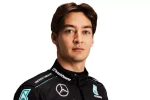
Mercedes driver George Russell also welcomed the prospect of a return to V8 engines, highlighting the distinctive sound of the previous generation.
"Absolutely. I'd love to see it," said the Briton. "I look at the old videos of the old engines, they give you goosebumps.
"I think it's about that high-pitched squeal that I'm missing from this era."
However, Russell does not believe Formula 1 should abandon electrical power altogether.
 Mercedes-AMG PETRONAS F1 Team @MercedesAMGF1
He argued that hybrid technology remains important to performance and suggested that a combination of V8 engines and electrical assistance could produce cars with more than 1,000 horsepower.
"You need to have some sort of hybrid because the power you get, you can't really produce that just solely on internal combustion," he said.
"If we go back to V8s, having some sort of electrical power as well to give you that extra 400, 500, 600 kilowatts to bring the cars to 1,000-plus horsepower, that's what we want."
Russell also cautioned against assuming that a return to the previous engine formula would automatically make Formula 1 cars faster.
"They sounded awesome, but the cars, they actually weren't very fast. And I don't think many people realise that," he added.
Antonelli welcomes prospect of lighter cars
Russell's Mercedes teammate Kimi Antonelli also welcomed the potential change, pointing to the possibility of lighter machinery.
The 20-year-old Italian, who secured his first world championship in Mexico City earlier this month, said a move towards a more traditional engine formula would be an exciting development.
"I think it's going to be very cool to go back to a more old style," he said.
"Also the cars will get lighter, so definitely I think it's going to be a very exciting revelation."
Mercedes-AMG PETRONAS F1 Team @MercedesAMGF1 The last time Formula 1 used naturally aspirated V8 engines was in 2013, before the introduction of the 1.6-litre V6 turbo hybrid formula the following season.
A return would not necessarily mean a repeat of that specification. The current discussions have centred on a turbocharged V8 with a smaller electrical contribution, designed to reduce complexity and costs while retaining relevant technology.
Two-time world champion Fernando Alonso, meanwhile, does not expect to still be competing when the new engines arrive.
"No, I won't be around for the new V8, 100%," said the 45-year-old Aston Martin driver.
"It's frustrating that it didn't happen back in 2014. That's 16 or 17 lost years of pure racing."